Your car breaks down on a Tuesday. Your landlord raises rent by $200. A surprise medical bill lands in your mailbox. Without an emergency fund, each of these becomes a full-blown crisis — and in your 20s, they hit different when you're still figuring out adulting.
Building an emergency fund isn't glamorous, but it's the single most powerful financial move you can make before 30. It's the difference between a rough week and a debt spiral. This guide breaks down exactly how to do it — even if you're living paycheck to paycheck right now.

Why an Emergency Fund Matters More in Your 20s
Your 20s are financially volatile by design. You're likely earning your lowest lifetime salary, switching jobs frequently, and navigating expenses you've never managed before. Without a safety net, one unexpected cost can cascade into credit card debt, missed payments, and a trashed credit score that follows you for years.
An emergency fund isn't about being paranoid — it's about buying yourself options. When your car needs $800 in repairs, you fix it and move on instead of putting it on a credit card at 24% APR. When a layoff happens, you have breathing room to find the right next job instead of panic-accepting the first offer. Financial flexibility in your 20s compounds into real freedom in your 30s and beyond.
How Much Do You Actually Need? Setting a Realistic Target
The classic advice says 3-6 months of expenses. That's a solid long-term goal, but it's paralyzing when you're starting from zero. Break it into milestones instead. Your first target: $1,000. That single thousand dollars covers most common emergencies — a car repair, a medical copay, an emergency flight home. It's not everything, but it's a game-changer.
After hitting $1,000, aim for one month of essential expenses. Calculate your bare-minimum monthly costs: rent, utilities, groceries, transportation, insurance, and minimum debt payments. That number — probably somewhere between $1,500 and $3,000 — becomes your second milestone. From there, build toward three months, then six. Each milestone reduces your financial anxiety significantly.
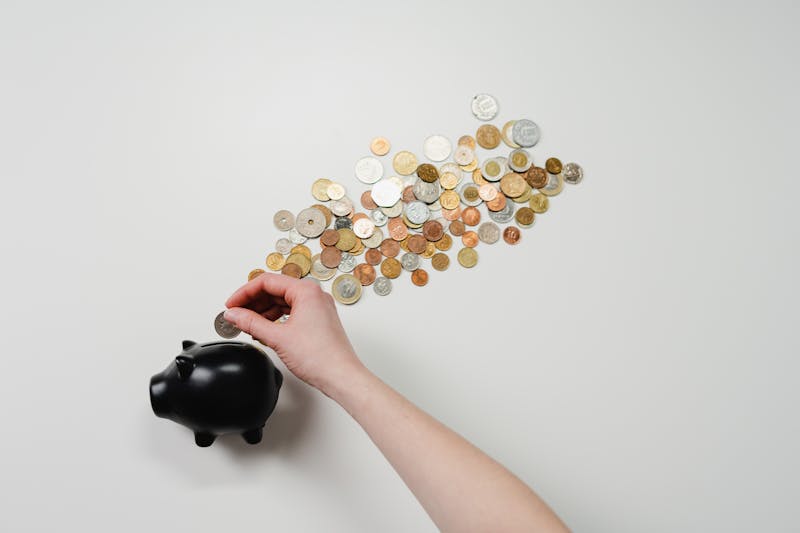
Where to Keep Your Emergency Fund (Not Under Your Mattress)
Your emergency fund needs to be accessible but not too accessible. A high-yield savings account (HYSA) is the sweet spot. In 2026, the best HYSAs offer 4-5% APY — your money grows while it waits. Look at options like Marcus by Goldman Sachs, Ally Bank, or Capital One 360. Avoid keeping it in your regular checking account where it'll get absorbed into daily spending.
Don't invest your emergency fund in stocks, crypto, or anything volatile. The whole point is that it's there when you need it, at full value, no questions asked. A market crash tends to coincide with layoffs — the worst time to discover your emergency fund lost 30% of its value. Keep it boring, keep it liquid, keep it safe.
The Automation Strategy: Pay Yourself First
Willpower is unreliable. Automation is bulletproof. Set up an automatic transfer from your checking account to your HYSA on payday — before you have a chance to spend it. Even $25 per paycheck adds up to $650 a year. That's not nothing. Start with whatever doesn't make you wince, then increase it by $10 every month.
The "pay yourself first" principle works because it reframes saving. Instead of saving what's left over (spoiler: there's never anything left over), you spend what's left after saving. Your brain adapts to the lower checking balance faster than you'd expect. Within two months, you won't even notice the money leaving.
Creative Ways to Accelerate Your Fund (Beyond Cutting Lattes)
Forget the tired advice about skipping coffee. Here are moves that actually make a dent. Sell stuff you don't use — old electronics, clothes you haven't worn in a year, textbooks collecting dust. Facebook Marketplace and Poshmark can easily generate $200-500 in a weekend purge. That's an instant boost to your fund.
Pick up a short-term side hustle with a specific savings goal. Drive for DoorDash, freelance on Fiverr, tutor online, or do TaskRabbit gigs — but earmark every dollar for your emergency fund. Having a concrete target ("I'm driving until I hit $1,000") makes the grind tolerable. Tax refunds, birthday money, work bonuses — redirect all windfalls straight into savings before lifestyle creep absorbs them.
Another underrated move: negotiate your recurring bills. Call your phone carrier, internet provider, and insurance company. Ask about discounts, loyalty rates, or cheaper plans. Fifteen minutes on the phone can free up $50-100 per month — money that flows directly into your emergency fund on autopilot.
What Counts as an "Emergency" (And What Doesn't)
This distinction saves funds from getting raided. Emergencies include: job loss, medical expenses, critical car or home repairs, and emergency travel for family crises. These are unplanned, urgent, and necessary. A concert ticket going on sale is not an emergency. Neither is a flash sale on sneakers, a spontaneous vacation, or "treating yourself" after a bad week.
Create a personal rule: before touching the fund, wait 48 hours and ask three questions. Is this truly unexpected? Is it urgent? Will not paying cause serious consequences? If you can't answer yes to all three, find another way. This filter prevents the slow bleed that drains most emergency funds before they're ever truly needed.
Staying Motivated When Progress Feels Painfully Slow
Saving $50 a paycheck when you need $5,000 feels like filling a swimming pool with a teaspoon. Track your progress visually — a simple spreadsheet, a savings app like Qapital, or even a thermometer chart on your wall. Watching the number climb, even slowly, triggers the same reward centers that make video game progress bars addictive.
Celebrate milestones without spending. Hit $500? Tell a friend. Reach $1,000? Screenshot it. Post it anonymously on Reddit's r/personalfinance (they'll hype you up). The psychological wins matter because they keep you in the game long enough for compound growth and habit formation to take over. Remember: the hardest part isn't saving $5,000 — it's saving the first $100 consistently.
Your Emergency Fund Is Just the Beginning
Once your emergency fund is solid, you've built something more valuable than the money itself: the habit of intentional saving. That muscle carries over into investing, retirement accounts, and building real wealth. Your 20s are the highest-leverage decade for financial habits — what you automate now echoes for forty years.
Start today. Not Monday, not next paycheck, not when you "make more money." Open a HYSA tonight, set up a $25 auto-transfer, and you'll have started the most important financial habit of your adult life. Future you will be genuinely grateful.
If you're looking for more resources on building smart habits and navigating adulthood with confidence, grab our Personal Finance Mastery: The Young Adult's Money Blueprint — practical stuff designed for people actually figuring life out.
Comments
Post a Comment